
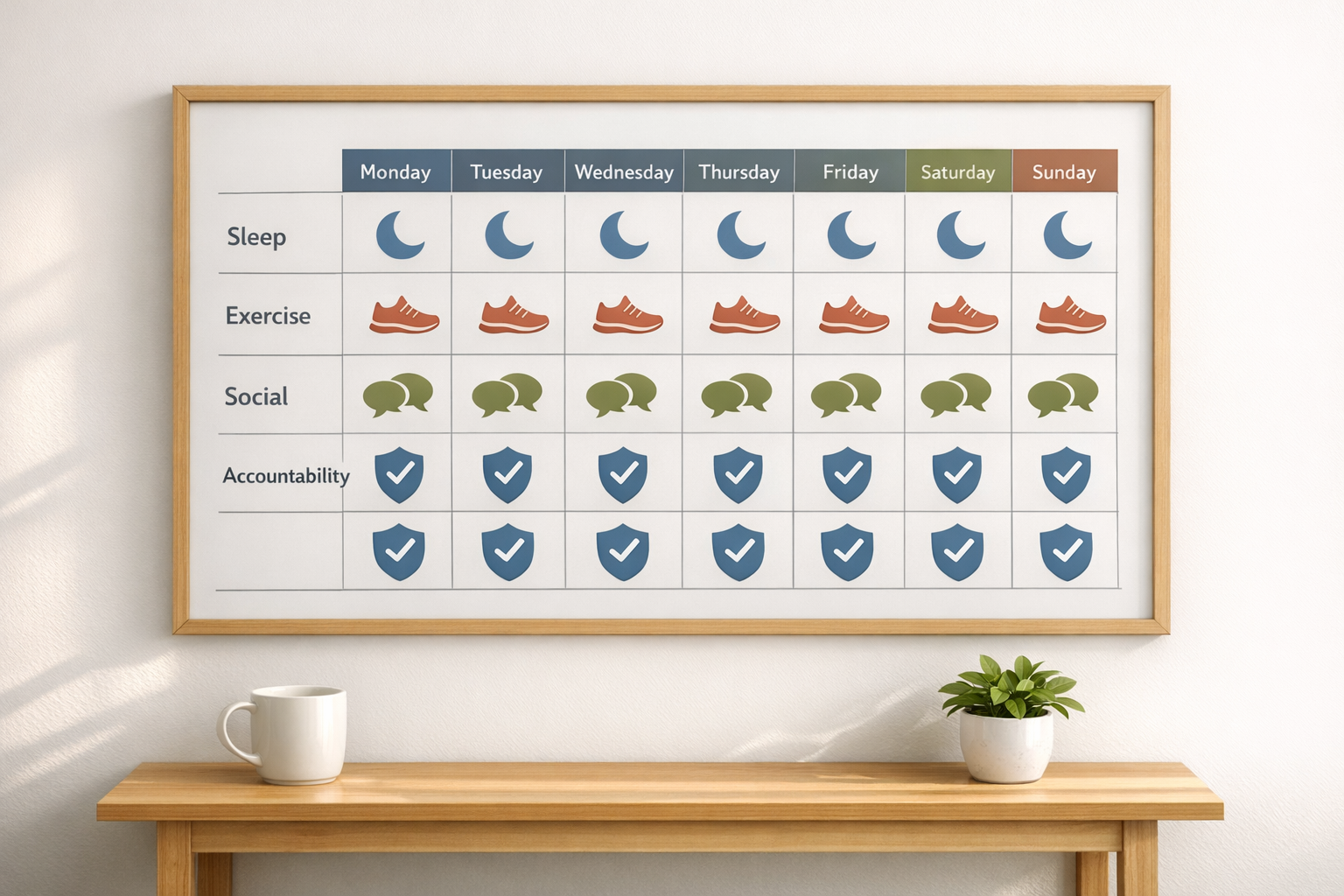
Routines for Relapse Prevention
Routines are a powerful tool for overcoming porn addiction and avoiding relapse. They reduce decision fatigue, fill unstructured time with meaningful activities, and help rebuild the brain's natural reward system. Without a structured day, boredom and emotional triggers like stress or loneliness can lead to setbacks. By creating a consistent schedule - focused on healthy habits like regular sleep, exercise, and social connections - you can stay on track.
Key Takeaways:
- Decision Fatigue: Routines automate small daily choices, saving energy for more important decisions.
- Unstructured Time: Idle moments often lead to cravings; routines replace them with purposeful activities.
- Emotional Stability: Consistent habits help manage stress, loneliness, and boredom, reducing relapse risk.
- Accountability: Scheduling activities and using tools like habit trackers or blockers strengthens commitment.
Start small with a few core habits, like a morning routine or regular check-ins with a support network. Over time, these small steps build a life where relapse feels less likely.
Simple Tool to Prevent Relapse in Recovery | Ryan Soave & Dr. Andrew Huberman
Why Relapse Happens
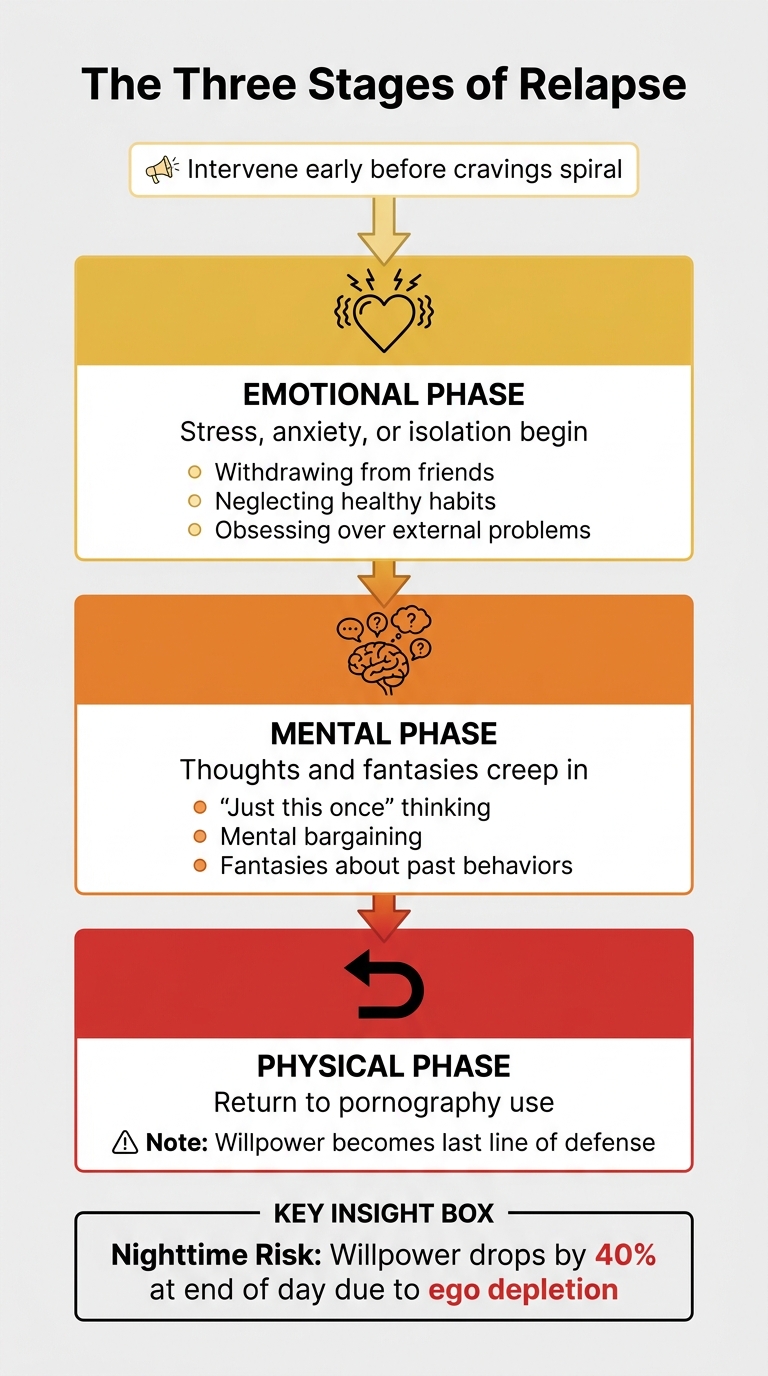
Relapse doesn't happen all at once - it's a gradual process that unfolds in three distinct stages: emotional, mental, and physical. It starts with an emotional phase marked by stress, anxiety, or isolation. This leads to a mental phase where thoughts like "just this once" or fantasies about past behaviors begin to creep in. Finally, the physical phase occurs when someone returns to pornography use[1][3]. Understanding this progression is crucial because it allows you to intervene early, before cravings spiral out of control. Let's take a closer look at the triggers and emotional factors that fuel this cycle.
At its core, relapse is often linked to unresolved emotional pain. As Patrick Devosse, creator of the REBORN Method, puts it:
You don't watch porn because you're horny. You watch porn because you're in pain and you've trained your brain that this is the fastest painkiller available[4].
In essence, the brain has been conditioned to use pornography as a quick escape from emotional discomfort - whether it's loneliness, stress, anger, or shame. These emotions, not physical desire, are the main drivers behind relapse[1][3].
Triggers and Habit Patterns
Certain environments, routines, or even specific times of day can act as triggers. For example, coming home after work, being alone late at night, or scrolling on your phone in bed can activate these ingrained habits[1][4]. Over time, these cues create automatic responses that often bypass conscious thought.
Nighttime is particularly risky due to something called ego depletion. By the end of the day, willpower can drop by as much as 40%[4]. This happens because rising cortisol levels and falling dopamine create a perfect setup for cravings. Meanwhile, your prefrontal cortex - the part of your brain responsible for self-control - is running on empty. At the same time, your limbic system, which drives cravings, stays fully active. To make matters worse, melatonin levels naturally increase at night, further reducing the activity of the prefrontal cortex. Together, these factors make it much harder to resist old patterns and can quickly push someone from mental rationalization to physical relapse[4].
How Emotions Affect Relapse
Stress, boredom, and loneliness don't just increase the chances of relapse - they're often the root causes. During the day, work and social interactions act as "buffers" that help regulate dopamine levels[4]. But when those buffers disappear, especially during unstructured evening hours, the brain may experience a dopamine deficit and look for a quick fix to restore balance. This highlights the importance of having routines that provide emotional stability and structure.
Isolation can make things even worse. When you're alone and dealing with unprocessed emotional pain, the brain often defaults to the fastest form of relief it knows. This is why early signs of emotional relapse - like withdrawing from friends, neglecting healthy habits, or obsessing over external problems - are such critical red flags[5]. These behaviors signal that you're heading into dangerous territory, even if a full relapse hasn't crossed your mind yet. The key is to address these warning signs early, before mental bargaining starts and willpower becomes your last line of defense.
How Routines Prevent Relapse
Structured routines play a powerful role in addressing the emotional and mental challenges that can lead to relapse. They help rebuild the brain's natural reward systems, creating a framework for healthier habits. As the Grata Editorial Team puts it:
Routine provides scaffolding while your brain rebuilds its natural reward pathways. [2]
This "scaffolding" works in three main ways: it replaces harmful behaviors with positive ones, stabilizes your mental and emotional well-being, and fosters accountability to keep you on track.
Replacing Bad Habits with Good Ones
Unstructured time is often a risky period for relapse. Studies show that individuals in early recovery use healthy coping strategies for about 30% of their day, but these strategies are often absent during their most vulnerable moments [7]. To counter this, it's essential to identify high-risk times and plan healthier alternatives. For instance, if evenings are challenging, you could schedule activities like exercising, calling a supportive friend, or attending a recovery meeting.
Routines also reduce decision fatigue, preserving your energy for managing cravings and emotional triggers. A great way to start is by creating "morning anchors." For example, dedicate the first 90 minutes of your day to taking any necessary medication, drinking water, doing 10 minutes of movement, and jotting down three positives - such as something you're grateful for, a recent success, and your intention for the day [2].
Even small tasks, like making your bed or preparing for the next day, can give you a sense of accomplishment. These small wins help reinforce your ability to stick to commitments. Research suggests it takes about 66 days for new habits to become automatic in early recovery [7]. Staying consistent during this period is crucial, as these habits not only help manage cravings but also set the stage for better emotional stability.
Better Mental and Emotional Health
Stress, boredom, and loneliness are common triggers for relapse, but a steady routine can help regulate your mood and improve impulse control. Maintaining consistent sleep and wake times - even on weekends - supports your circadian rhythm, which boosts energy, mood, and self-control [2][7]. A predictable daily structure can also help you navigate the emotional relapse stage, a period when you might begin to withdraw from others or neglect self-care [8].
Simple routines, like eating regular meals, staying socially engaged, and getting enough rest, can make a big difference. Taking medication at the same time each day can also stabilize blood levels and reduce cravings [2]. Even without medication, scheduling productive activities - like volunteering, taking a class, or tackling a household project - can help retrain your brain to associate certain times of day with positive action rather than avoidance.
On days when motivation feels low, try adopting a "Minimum Viable Routine." Instead of overhauling your entire schedule, focus on just a few essentials: taking medication, eating at least two meals, and maintaining a consistent bedtime. Even a scaled-down version of your usual routine - like a short walk instead of a full workout - can help you stay on track and avoid all-or-nothing thinking [2][7].
Building Accountability Through Daily Structure
A well-designed routine naturally builds accountability. By scheduling specific activities, you take control of your day while also improving emotional regulation [9]. Commitments like a volunteer shift, a recovery meeting, or a regular check-in with a friend create external anchors that help you avoid slipping back into old patterns.
Social connections are especially important. Since conflicts with loved ones are linked to over 50% of relapses [8], scheduling at least one positive interaction each day - like a phone call, coffee date, or support group session - can help combat isolation, a common obstacle in recovery [2].
Using tools like habit trackers, calendars, or apps can add another layer of accountability. Sharing your daily goals with an accountability partner who checks in regularly can further strengthen your commitment [2]. For those seeking additional reinforcement, tools like Pledgely provide a unique approach by blocking adult content on your devices and imposing a financial penalty if the blocker is disabled. This kind of tangible consequence can make it harder to justify a lapse during moments of low willpower.
As Mark Twain wisely said:
The secret of getting ahead is getting started. The secret of getting started is breaking your overwhelming tasks into small, manageable tasks, and starting on the first one. [9]
Your routine is that first step - a collection of small, manageable commitments that build up to lasting transformation. Over time, as Windward Way Recovery notes:
A well structured routine becomes less about avoiding relapse and more about creating a life you do not want to escape from. [7]
This focus on accountability and structure lays the groundwork for tackling routine challenges, which will be addressed in the next section.
Common Routine Challenges and Solutions
Even the most well-thought-out routines can face hurdles. The key is learning to navigate these bumps without letting them derail your progress. Here's how to tackle some frequent challenges when building and sticking to a daily structure.
When You Lack Motivation
Motivation tends to dip around the 21-day mark - a common phenomenon when starting new habits [11]. To prepare for this, design your routine to be manageable even on tough days. For example, a 20-minute routine you can stick to consistently is far better than a 45-minute one that gets skipped when you're feeling exhausted or overwhelmed. On particularly hard days, rely on a Minimum Viable Routine (MVR) - a simplified version of your routine that helps you keep moving forward without the pressure of perfection. This approach ensures you stay on track, even with low energy [11].
Another helpful strategy is habit stacking, which involves linking new tasks to existing habits. For instance, telling yourself, "After I pour my coffee, I'll take my medication," reduces decision fatigue and helps conserve mental energy for other challenges, like managing cravings or emotional triggers. Tracking specific actions - such as "walked for 10 minutes" or "called a friend" - instead of vague goals also provides a sense of accomplishment. This immediate feedback reinforces progress, especially since accountability can increase success rates by up to 95% [10].
Next, learning how to handle setbacks is crucial for maintaining your routine.
Handling Setbacks
Setbacks are bound to happen, but a strong routine can help you recover quickly. Missing one day isn't a failure, but two missed days in a row could signal a breakdown in your system that needs attention [11]. The "Never Miss Twice" rule can help here. If you miss a day, focus on the smallest possible action to reconnect with your routine. For example, if you skip your morning walk, try doing three minutes of stretching before bed. Small steps like this help you regain momentum without feeling overwhelmed [13].
Creating a flexible, tiered routine can also support your recovery. Think of it as having three levels: a Minimum Routine for tough days, a Standard Routine for regular days, and an Optimized Routine for when everything is going smoothly [11]. Additionally, identify your non-negotiables - two or three core habits that form the foundation of your recovery, such as taking medication, eating regular meals, or maintaining a consistent sleep schedule [2].
Tools That Help You Stay Consistent
When motivation wanes or habit-building strategies fall short, digital tools can provide extra support. Apps like Habitica use game-like rewards to make task completion more satisfying, while Finch offers a gentle and compassionate way to help you bounce back after setbacks [12]. Tools like Reclaim AI can also protect your schedule from interruptions.
For those recovering from pornography addiction, tools like Pledgely block adult content across apps and browsers while ensuring user privacy by operating locally. Its financial pledge system, which charges users $5 to $100 if they disable the blocker, strengthens commitment during moments of low willpower.
How to Build Your Recovery Routine
Creating a recovery routine might seem like a lot at first, but it doesn't have to be perfect from the start. The key is to begin with small, manageable steps and gradually build on them as you go. Focus on what's most important to your recovery and let the rest follow.
Choose Your Recovery Priorities
Start by identifying your non-negotiables - the essential habits that must happen no matter what. These might include things like taking your medication on time, eating at least two meals a day, and sticking to a consistent sleep schedule [2]. These will serve as the foundation of your routine.
When adding other activities, think about how they align with your values. For example, exercise can be about honoring your body, journaling can deepen self-awareness, and spending time with others can help rebuild relationships [2].
Take it slow by introducing one habit at a time. For example:
- In Week 1, focus on medication and sleep.
- In Week 2, add activities like work or social connections.
- In Week 3, include physical movement.
- In Week 4, add an evening wind-down routine [2].
This gradual approach helps you avoid feeling overwhelmed and gives each habit time to stick. Research shows it typically takes about 66 days for a habit to become automatic [15].
Once you've outlined your priorities, organize your day around these core habits.
Schedule Your Day Around Healthy Activities
Recovery often comes with a lot of unstructured time, which can lead to boredom or cravings if left unchecked [14][15]. Filling this time with intentional activities is crucial.
Start with morning anchors during the first 90 minutes after waking. This period sets the tone for your day [2]. A simple morning routine could include:
- Taking medication
- Drinking water
- Eating a light meal
- Doing 10 minutes of movement
- Journaling (e.g., expressing gratitude or setting daily intentions)
The exact timing isn't as important as the order of activities.
In the afternoon, focus on purposeful tasks like work, volunteering, online courses, or household projects. These activities train your brain to stay productive and reduce the risk of relapse [2]. Make sure to include at least one social interaction each day that's not tied to a specific task, such as attending a support group, calling a friend, or checking in with a sponsor. This helps combat isolation and emotional triggers [2][14].
Incorporate movement twice a day if possible - once in the morning to boost endorphins and again in the afternoon to fight off the mid-day energy slump.
End your day with an evening wind-down routine to protect yourself during the vulnerable nighttime hours. This could include:
- A "digital sunset" (putting your phone away to avoid blue light exposure)
- Preparing for the next day (laying out clothes, packing lunch, etc.)
- Relaxing activities like reading or drinking herbal tea [2][15].
Track and Adjust Your Routine
Once your routine is in place, it's important to keep track of how it's working and make adjustments as needed. Use tools like habit trackers or recovery journals to monitor your progress. Write down what you accomplished each day and note any changes in your mood [2][15]. Journaling prompts like "What went well today?", "What was the hardest part of my routine?", and "How can I improve tomorrow's schedule?" can help you spot patterns [15].
Review your routine weekly or biweekly to compare your goals with what you actually did [15]. If you find yourself skipping certain tasks, try moving them to a different time of day instead of dropping them entirely. For instance, if you often miss an afternoon walk, consider doing it in the morning instead [2].
Another helpful tool is the HALT inventory, which stands for Hungry, Angry, Lonely, and Tired. Check in with yourself multiple times a day to address these needs before they escalate into cravings [6]. This simple practice can help you catch early warning signs like isolation, poor eating habits, or skipped meetings that might lead to an emotional relapse [5].
For those recovering from pornography addiction, apps like Pledgely can add an extra layer of accountability. Pledgely blocks adult content across devices and browsers, and its financial pledge system charges users if they disable the blocker. This helps reinforce your commitment when willpower alone might not be enough.
Conclusion
Recovery thrives on consistency. Having structured routines helps replace chaos with predictability, filling idle moments with meaningful activities and training your brain to focus on daily achievements instead of harmful behaviors.
Incorporating simple, intentional habits into your day creates a foundation for healing. Start by identifying your must-haves, plan your day around positive actions, and keep track of what proves effective. Routines don't need to be rigid - they should evolve with your needs while keeping your recovery as the priority.
To strengthen accountability, tools can provide added support. For example, Pledgely is a resource for those recovering from pornography addiction. It blocks adult content across devices and browsers while safeguarding your privacy by operating locally. Its financial pledge system - charging you if you disable the blocker - acts as an extra motivator during moments when willpower might waver, making it harder to stray from your goals.
Focus on progress: one day, one habit, and one small victory at a time.
FAQs
What should my minimum daily routine include?
Your daily routine plays a big role in recovery. Incorporate structured activities like getting consistent sleep, eating balanced meals, handling stress effectively, and participating in support groups. These practices not only support your mental and physical health but also help lower the chances of relapse.
How do I handle high-risk times like late nights or being alone?
Establishing structured routines is a smart way to navigate high-risk times, such as late nights or moments when you're alone. Filling these periods with healthy distractions - like reading, exercising, or pursuing hobbies - can make a big difference. Tools like Pledgely, which blocks adult content on your device, can also provide an added layer of support. By planning alternative activities ahead of time and setting up an environment that reduces temptation, you'll be better equipped to stay focused and in control.
How can I build accountability into my routine without relying on willpower?
To create accountability without relying solely on willpower, consider tools like Pledgely. This app enforces accountability by introducing financial stakes. It blocks adult content directly on your device, and if you disable the blocker, you're charged a predetermined amount. By adding immediate and clear consequences, Pledgely uses the concept of commitment contracts to help you stay on track with your goals more effortlessly.